UNISON’s council and school members vote on pay strikes
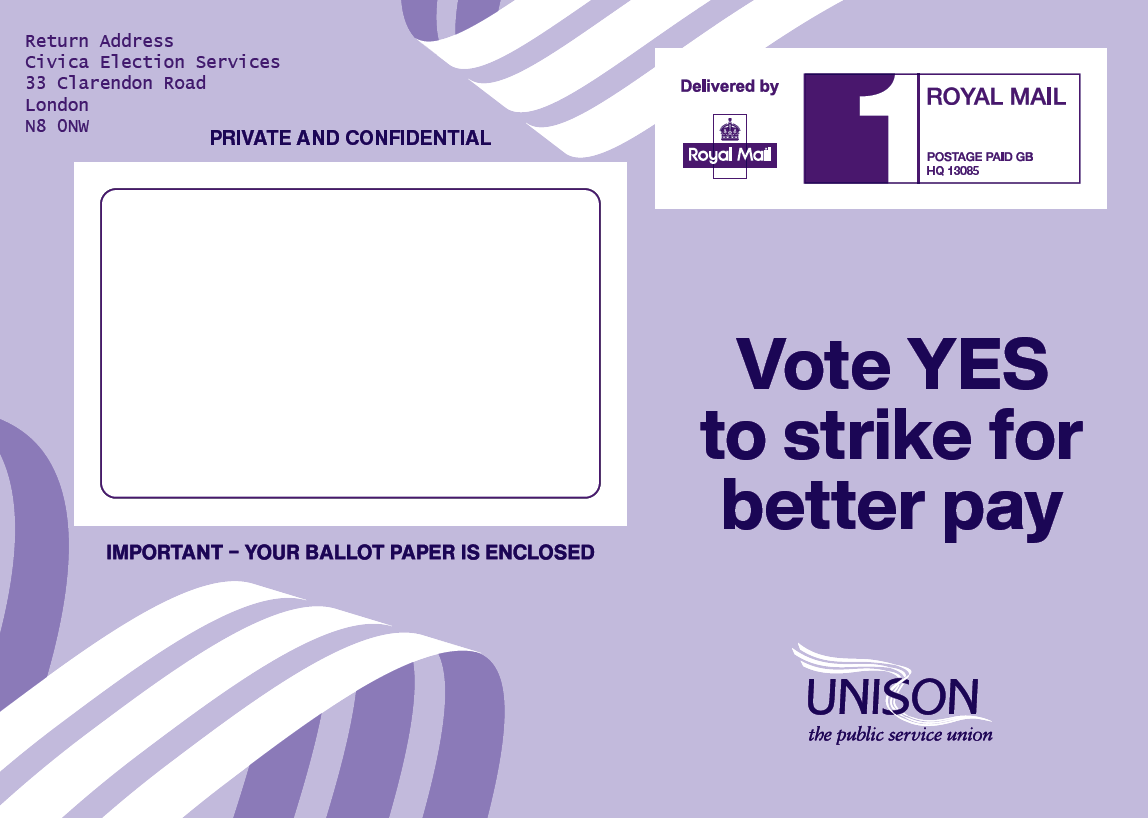
Look out for your purple envelope in the post to vote on the strike, and make sure your address is up to date in UNISON's records
Who is being balloted?
Around 200,000 council and school workers at more than 500 employers in England and Wales, including Brighton and Hove City Council begin voting today (Thursday) on whether to strike over pay. The ballot runs until Thursday 6 August. Look out for your purple envelope in the post over the coming weeks!
I'm not in UNISON can I be included?
Currently UNISON is the only union in the city council that is balloting its members on strike action over this year's pay offer. However, anyone who joins UNISON in the next two weeks can be included in the ballot. So join now if you want to be a part of the fightback.
What is the ballot about?
The ballot follows the union's rejection of a 3.3% pay offer from local government employers, which UNISON says falls well short of restoring the value of staff pay after years of decline. Teaching assistants, social workers, waste collection staff, trading standards teams, housing officers and librarians are among those voting in the four-week ballot.
UNISON general secretary Andrea Egan said today: “Council and school workers kept vital services running through years of brutal austerity, with rising demand and relentless pressure. They deserve far better than another pay offer leaving them falling ever further behind:
“This huge ballot is the direct consequence of employers expecting staff to accept less while delivering more, year after year. That's taken a growing toll on workers, on local services and on the communities depending on them.”
Earlier this year, local government employers wrote to the three main unions – UNISON, Unite and GMB – outlining the 3.3% pay deal for 2026-27. All three rejected the deal. UNISON and Unite are now balloting over potential strikes.
UNISON says the employers' offer does nothing to reverse years of falling pay across local government and schools. Staff have seen the value of their wages fall by an average of around 26% since 2010, when adjusted for inflation.
The impact has been felt across the workforce. Typically, for a teaching assistant that is equivalent to around £7,000 in lost real-terms pay, as much as £18,000 for a social worker and almost £19,500 for a housing officer.
Low pay is also making it harder for councils and schools to recruit and retain staff, which adds pressure on vital local services and the communities relying on them, the union says.
Andrea added: “No one chooses lightly to take strike action. And there's still time for employers to improve this pay offer and avoid a dispute.
“Failing that, it should come as no surprise if workers decide the only way left to secure the fair pay and respect they deserve is to walk out.”
If the ballot is successful when would we go on strike?
If workers back industrial action, walkouts could begin early in the autumn.